All posts by Jennifer Johnson
An Interview with Gamal Abdel Nasser
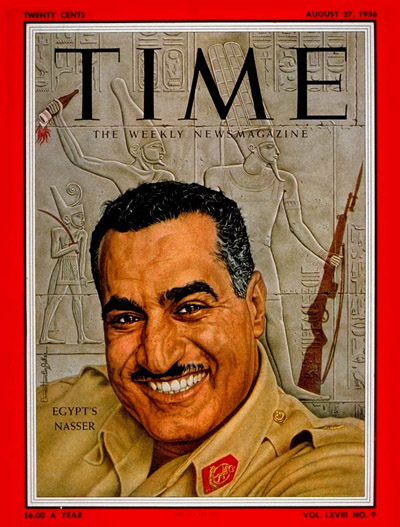
- Photo Time Magazine 1956 courtesy of Google
Utilizing characterai.com, I entered Gamal Nasser in the search box, curious to see if he would be an option on the platform. To my surprise, several different options for him immediately populated the screen. I clicked on the first option, which boasted a record 106,000 interactions, far surpassing the number of interactions reported for any other Nasser option the site provided.
In preparation for the assigned interview, I read several chapters of Nasser: The Last Arab, By Said K. Aburish. I used this source to develop an understanding of my subject and formulate my questions. I then read two Time magazine articles from the 1950s reporting serious conflicts in his presidency, and completed my research by watching multiple videos selected from The Middle East History Channel on Youtube labeled as Nasser biographical pieces.
I organized my questions in a Q and A format, leaving space for the answer provided by character AI directly below the question. Directly below the AI answer, I provided the answer I discovered through the consulted resources with citations provided by footnote.
While the answers provided by characterai.com generally align with the answers discovered through my more traditional research methods, there were some notable oddities. Specifically, when asked about the Free Officer’s the ai response referred to them as “they”. However, Nasser was the founder and head of the free officers movement so “we” might have been more fighting.
The AI answers to questions were also notably more vague. For instance, it mentions the collapse of the monarchy but neglects to tie that to the specific coup organized by Nasser, leading the King to abdicate.
Please follow the link below to read the full interview with President Nasser:
Fake Social Media Profile
https://www.tumblr.com/blog/globalgabs07
I established a fake profile on Tumblr to reflect the year 2007. The posts focus on US pop culture and global affairs – mostly relating to China. I included a very primitive survey, utilized two gifs, and linked an old YouTube video. The profile can be explored by clicking on the link provided above.
Propaganda Art of the Muppet -Sesame Street Wars
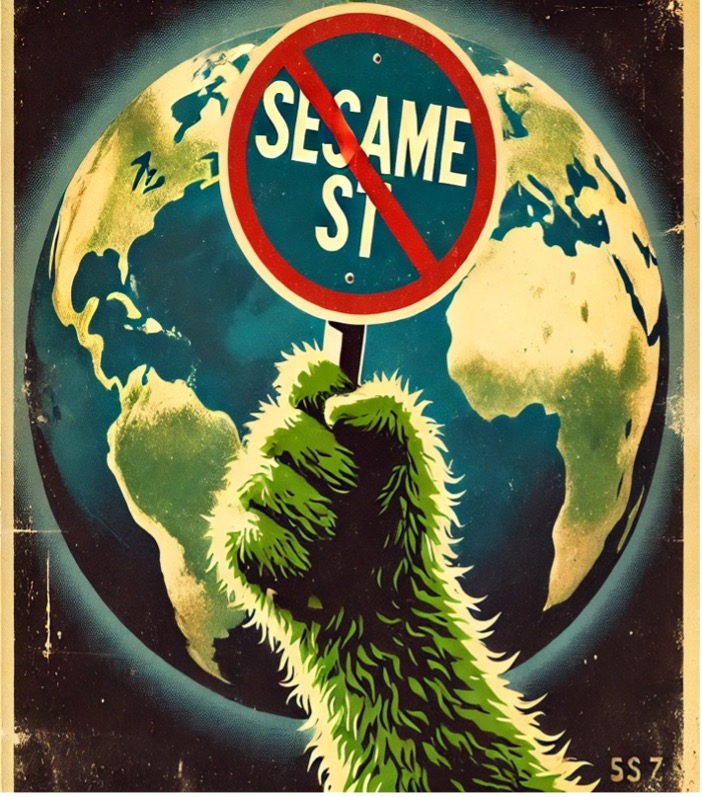
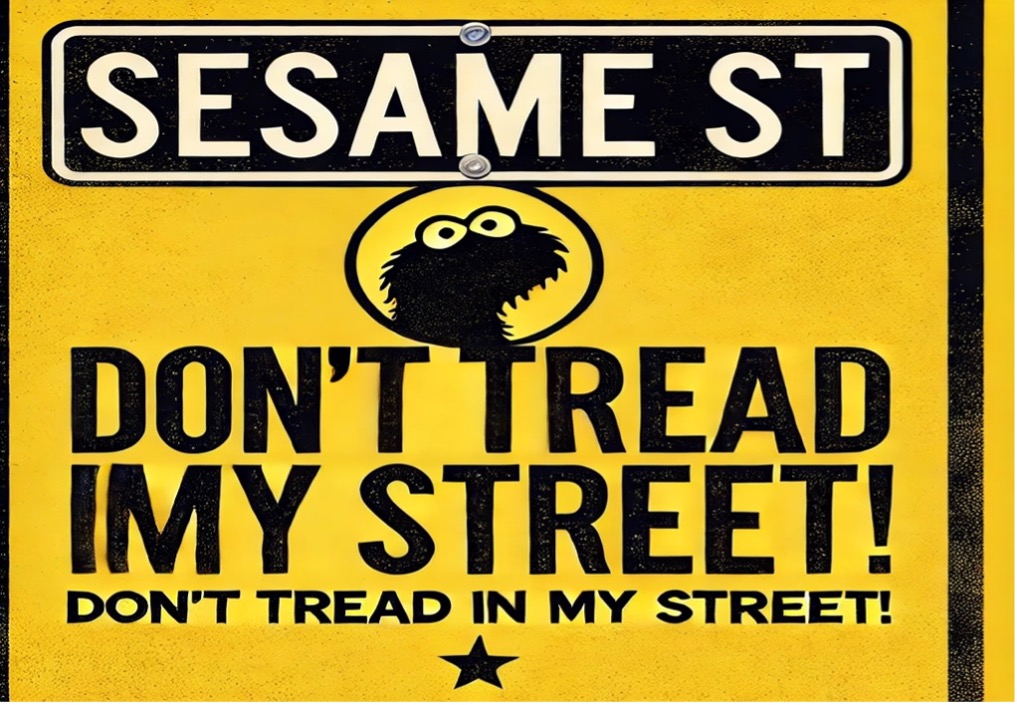
In the fictional battle between Sesame Street and the Muppets, two very significant mediums of propaganda are stickers and posters.
Inspired by the North Korean propaganda poster (first image) found with Google Images, I created the the Kermit the Frog Anti-Sesame Street propaganda poster utilizing ChatGPT:

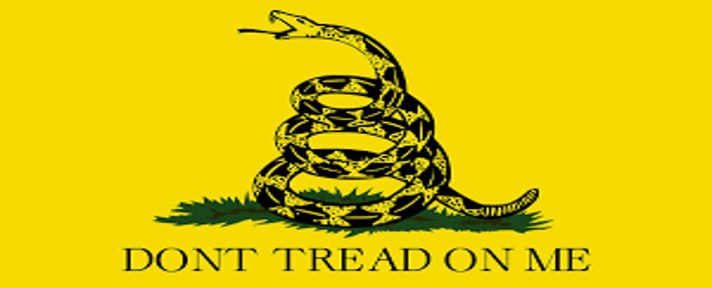
Another inspirational piece of propaganda are the highly popular Gadsden flag stickers (first image) seen on vehicles throughout Virginia. This inspired the Sesame Street propaganda sticker in response to the Muppet aggression (second image).
Pictograph Reflection
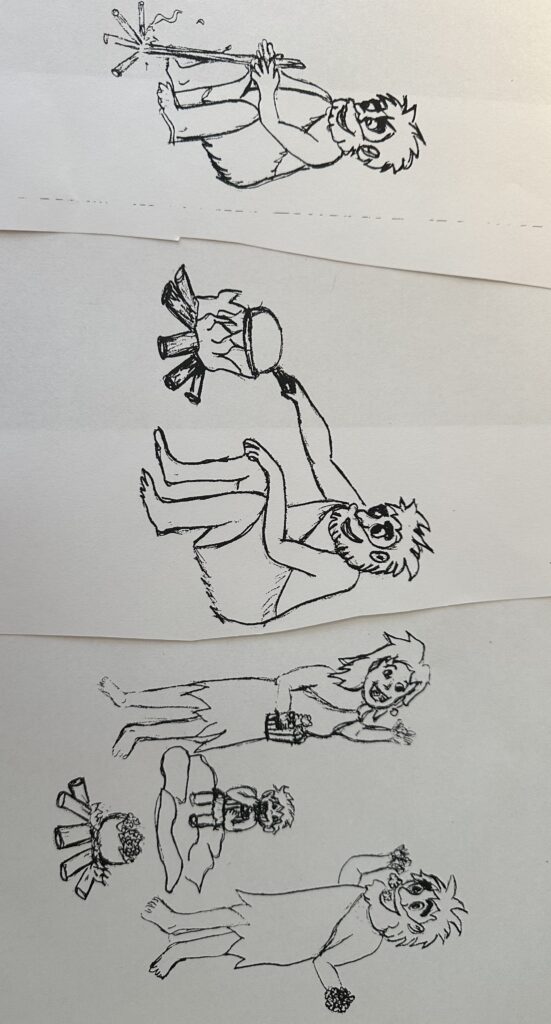
For my cave pictograph pictures, I chose Jiffy Pop popcorn and Sharpie permanent markers. I selected modern inventions that cave dwellers could use independently of other modern items, making their functions and implementations easy to understand.
For the Jiffy Pop (popcorn), I illustrated the process of a caveman starting a fire, placing the product over the flames to pop the popcorn, and finally enjoying it with his family.
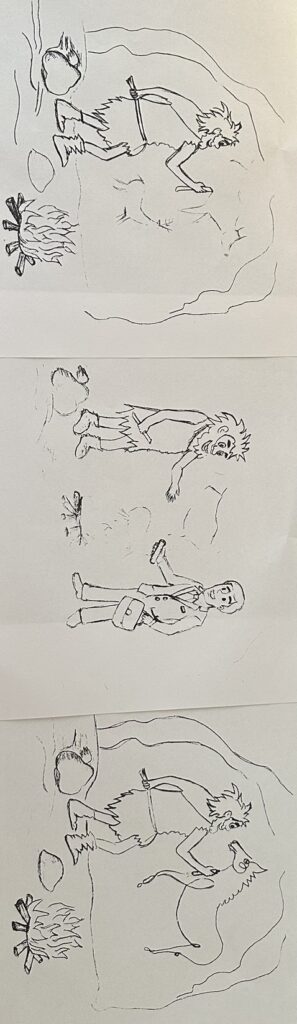
For the permanent marker, I illustrated a caveman creating cave art the traditional way, followed by a modern-day salesman offering him a permanent marker to try. Finally, I depicted the caveman using the marker to draw an image resembling Picasso’s horse on the cave wall.
This assignment was a great opportunity to think about how cave people lived, using the materials available to them in their daily lives to create art and record events.
I am late to post, but better late than never. Sometimes. So far, 427 has been very interesting. I have enjoyed how interactive the class is. Having the opportunity to participate in the design of assignments goes above and beyond an average course experience and taking turns with leading discussion gives us the opportunity to steer the discussion to what we found most important or interesting about the particular lesson.
Downey Summary and Timeline of Cherokee Civil War Events
Downey: Technology and Communication in American History
Downey explains the Information Age in America as part of our history that has been continuously evolving. The relationship occurring between technology and the American people and how that influences our culture, which then in turn drives on changes in advancing technology and influencing the lives of the people.
On the History of Communication and Information as provided by Winston, Gleick, and Evans
In “Media, Technology, and Society[1],” author Brian Winston argues that the term “revolution,” when used to describe the more recent events in the progression of technology, is ill-fitting, as the historical record indicates a slower pace of change than what is typically associated with terms like “revolution.” He states that:
… “I shall argue more specifically there is nothing in the histories of electrical or electronic communication systems to indicate that significant major changes have not been accommodated by preexisting social formations. Therefore, the term “revolution” is quite the wrong word to apply to the current situation.”
Through this statement, he conveys his position, which he then supports by discussing the necessity, development, and reception of new technology.
Dissimilar to Winston’s position, “The Information[2],” author James Gleick frames Bell Labs Mathematical Research Group’s Claude Shannon’s 79-page journal publication, “A Mathematical Theory of Communication,” in 1948 as a profound moment early in the information age – a revolution, without ever using the word. Gleick explains that in his work, the 32-year-old mathematician coined the term “bit” as a measurement of information. Expanding on the significance and impact of Shannon’s findings, Gleick explains the bit was adopted by other scientific disciplines, ultimately leading to a new understanding of natural sciences, among other things. He does not argue for or against terms like revolution; however, Gleick frames the revolution as arising from the bit.
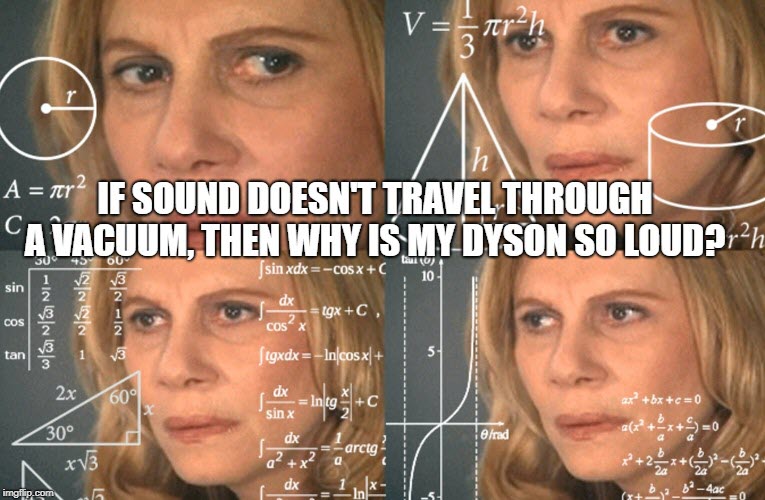
In “Broad Bands[3],” author Claire L. Evans weaves together a historical image of women in technology, which goes back hundreds of years. Among some of the more notable contributors out of the many women working in the areas of math and technology she includes, she highlights 19th-century English mathematician and daughter of Lord Byron, Ada King. Evans discusses other women in the space of math, technology and science as well, such as the all-women staff of “computers” working for the Naval Observatory to chart the movement of the night sky through mathematics in the early 20th century. Maria Mitchell, who discovered a comment and was honored by the King of Denmark, were one of the US Navy’s computers. Evans work provides a distinctly female contribution from a much earlier point in the evolution of technology, neither topics were approached by Gleick or Winston in their work. This reminded me of a popular meme recently circulating on social media platforms which was seemingly poking fun at the stereotype surrounding women’s mathematical ability and understanding :
https://i.kym-cdn.com/photos/images/original/002/054/713/75a.jpg
Winston, Gleick, and Evans each provide unique perspective, arguments, and contributions to the history of the technological or information age or revolution for us to explore this semester. Just a few things to address might be coming to a consensus on a more narrow definition of what the information age or technological revolution is, if it exists, and if so, when and where it first began, as well as some of the diversity among the many people who may have contributed to it so far.
[1] Brian. Winston and Brian. Winston, Media Technology and Society: A History : From the Telegraph to the Internet (London ; Routledge, 1998), 6.
[2] James Gleick, The Information: A History, a Theory, a Flood (New York: Vintage Books, 2012), 3-13.
[3] Claire Lisa Evans, Broad Band: The Untold Story of the Women Who Made the Internet (New York, New York: Portfolio/Penguin, 2018), 9-26.
Introduction
Introduction
Hello! I am excited to be joining 427 to learn the history of the information age. I look forward to having the opportunity to collaborate with everyone as we progress through the semester- working both virtually and in person.
When reviewing the draft syllabus, the topics of national security in the information age as well as how government bodies engage with and utilize different social media platforms stood out for me. I look forward to learning more on these topics and found relative assignments interesting.
I would appreciate the opportunity to explore the propaganda assignment done by an earlier class. This seemed very interesting and I look forward to potentially working on this or something similar. I think it would be an interesting way to capitalize on all of the resources in the DKC as well.
Utilizing the resources available through the DKC, there are many creative approaches we might experiment with to meet our assignment and overall course objectives. For instance, as a fan of several podcasts, I found it interesting and exciting that the DKC has resources to assist in podcast creation. I look forward to exploring the DKC and learning more.
As the semester moves along, and we begin to grasp the course material, I believe we should approach where to go with our contribution to the Timeline collaboratively. As of now, I am not sure that I have enough information to contribute as thoughtfully on this as I would like to. I look forward to having constructive input on the timeline soon.
I am confident that as we more fully develop the shape 427 will take, the allocation of groups, time, and resources will evolve somewhat organically through our classroom and online collaborative discussions and decision making. I look forward to progressing through it all with you here online and in class!